By 2025, the RK3588 remains one of the strongest domestic SoCs in the AIoT field. This chip, manufactured using an 8nm process, boasts excellent computing and graphics processing capabilities, finding extensive applications in smart homes, smart cities, medical health, education, and other fields.
Its advantages lie not only in hardware performance but also in a mature ecosystem—Rockchip has made the public version SDK available to numerous OEM factories, significantly lowering the development threshold.
The YY3588 development board reviewed here is a representative product based on the RK3588 chip. It adopts a core board + baseboard modular design, achieving high-performance output within a compact size, making it suitable for industrial control, edge AI, smart terminals, and many other diversified scenarios.
Compared to similar products, its core advantages are evident in three aspects: first, a rich array of network and communication interfaces (supporting 2.5G Ethernet and NFC); second, it exposes all display interfaces supported by the RK3588 (dual DSI/eDP/HDMI/DP); and third, it comes pre-installed with Android 14, Debian 12, and OpenHarmony 5.1, meeting multi-platform development needs.
Hardware Configuration and Pricing Introduction
The hardware configuration and distribution of the YY3588 development board are as follows:
| Component |
Details |
| Processor CPU |
RK3588, 8nm process, Octa-core 64-bit CPU, main frequency up to 2.4GHz |
| Display GPU |
ARM Mali-G610 MP4 (Max frequency 1GHz) Quad-core,
supports OpenGL ES 1.1/2.0/3.1/3.2, OpenCL 1.1.1/2.2.0, Vulkan 1.1.1/2, 450 GFLOPS graphics acceleration module |
| NPU |
6TOPS NPU computing power, Tri-core architecture, int4/int8/int16/FP16/BF16/TF32 mixed computing (supports TensorFlow / MXNet/PyTorch/Caffe models) |
| Memory |
LPDDR4/4X 4GB/8GB/16GB/32GB (optional), frequency up to 3200Mbps |
| Onboard Storage |
• Onboard eMMC5.1: 32G/64G/128G/256GB (optional)
• SPI Flash (16MB, not populated by default)
• M.2 M-Key interface:
1. Supports NVMe 2280 SSD (PCIe3.0)
2. SATA3.0 (via FPC seat expansion)
• MicroSD card slot |
| Network |
• Wired network: 1x Gigabit Ethernet (RJ45), 1x 2.5G Ethernet (RJ45)
• Wireless network: M.2 E-Key expansion slot, default support RTL8852BE WiFi6+BT5.2 dual-band WiFi+Bluetooth module
• 4G LTE: MiniPCIe interface + SIM slot, default support EC20 |
| Display Output |
• 1 * HDMI2.1 (8K@60fps or 4K@120fps)
• 2 * MIPI DSI DPHY (4 Lane output, up to 4K@60Hz)
• 1 * DP1.4 (up to 8K@30fps, via Type-C interface output)
• 1 * EDP (FPC seat 0.5mm) |
| Video Input |
• 2 * MIPI CSI DPHY (1x4 lanes or 2x2 lanes, 30Pin-0.5mm)
• 1 * HDMI-IN (4K@60fps), supports HDCP 2.3 |
| Audio Output |
• 3.5mm headphone jack (4-wire CTIA standard)
• SPK speaker output (4Ω2W output)
• SPDIF (on 30Pin header) |
| Audio Input |
• Onboard MIC
• 2PIN header MIC (2pin 1.25mm) |
| Buttons |
4x: MaskROM/Recovery/Power/Reset |
| USB |
• 4x USB3.0
• 1x USB2.0 (header pin, 1x 4pin 2.0mm)
• 1x USB Type-C full-function (DP1.4/OTG) |
| UART |
• 1x UART DEBUG (4pin 2.0mm)
• 1x UART (4pin 2.0mm)
• 3x UART(4pin 1.25mm) |
| I2C |
2x I2C (4pin 1.25mm) |
| CAN |
1x CAN (4pin 1.25mm, CAN level) |
| RTC |
1x RTC (2pin 1.25mm) |
| LED |
• 2x Red/Green LED (programmable)
• 3pin header output (3pin 1.25mm) |
| Power |
• DC seat: 12V (5.5 * 2.1)
• 2pin header output (2pin 2.54mm) |
| NFC |
NFC passive communication, supports data transfer with mobile phones, compatible with Android/iOS phones.
Includes examples and API tutorials. |
| Infrared IR |
1.25mm 2PIN header output |
| FAN |
1x FAN (2pin 1.25mm) |
| 30Pin Expansion Header |
• DC: 3x 5V, 1x 3.3V
• I2C: 1x I2C
• SPDIF: 1xSPDIF
• PWM: 1x PWM
• UART: 2x UART
• USB2.0: 2x USB2.0 |
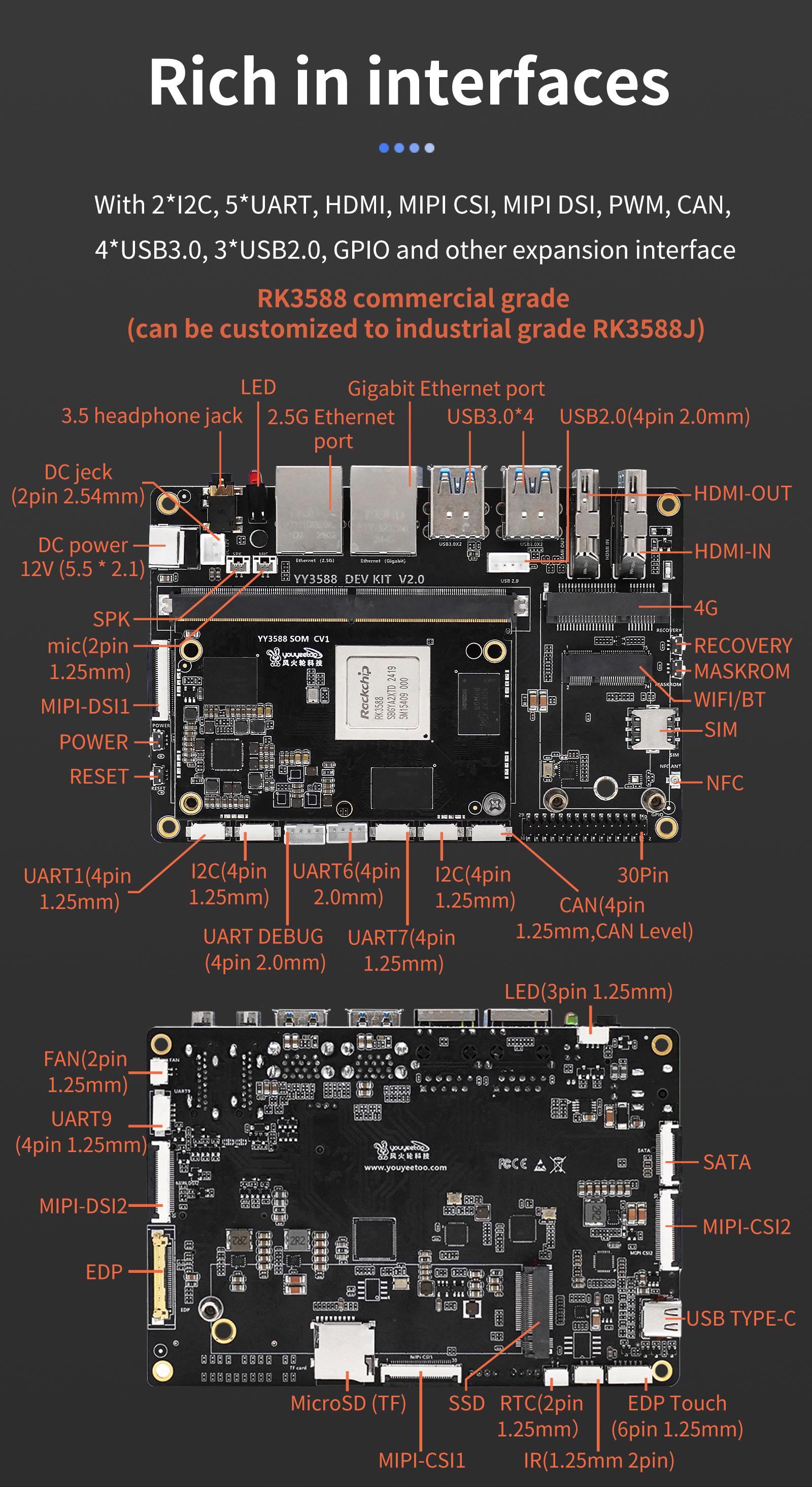
Regarding hardware configuration, the YY3588 is based on the Rockchip RK3588 public solution. The test sample in the author's hand uses a 4GB+32GB storage combination, with onboard LPDDR4 memory and Flash using SanDisk eMMC modules.
Compared to similar development boards using non-branded storage solutions, its configuration significantly enhances system stability.
Additionally, the YY3588's expansion interface design is a highlight. It adopts a standardized M.2 interface for WiFi/BT modules and simultaneously supports PCIe2.1 and USB2.0 protocols. This design not only supports mainstream laptop wireless network cards but also greatly enhances external device expansion capabilities.
In the current market, comparable RK3588 development boards (4+32GB configuration) are often priced much higher, especially when using top-tier brand storage components. In contrast, the YY3588 offers a significant price appeal while ensuring the quality of its core components.
Operating System
The YOUYEETOO team currently offers three mainstream operating systems for the YY3588: Android 14, Debian 12, and OpenHarmony 5.1. All necessary firmware and source code downloads are available on the official wiki: https://wiki.youyeetoo.com/en/YY3588/Downloads
In addition to these officially supported systems, if you have experience with system migration, you can also port other Linux-based systems.
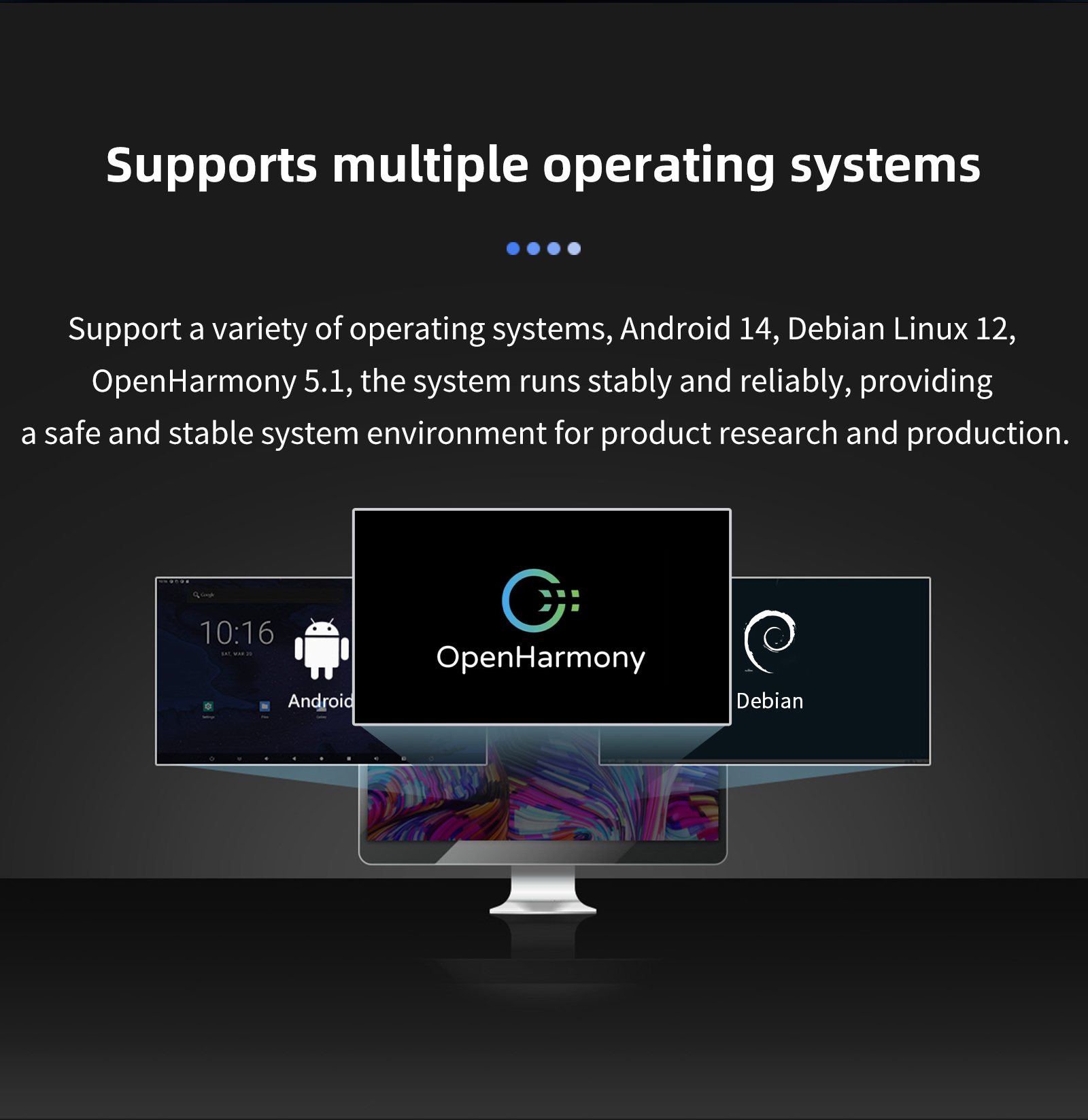
The usage guide and development guide for Debian and Android on the official team wiki are very detailed, and can be viewed at https://wiki.youyeetoo.com/YY3588.
Performance Testing
For smart terminal devices like this, Antutu was chosen to evaluate its performance. The system uses the official Android 14, and the Antutu version is v10. It can be installed via adb/U disk.
After installation, testing can begin immediately. During the test period, you can use the following commands to check the status:
Check GPU frequency:
cat /sys/class/devfreq/fb000000.gpu/cur_freq
Check CPU large core frequency:
cat /sys/devices/system/cpu/cpufreq/policy4/scaling_cur_freq
Check CPU small core frequency:
cat /sys/devices/system/cpu/cpufreq/policy0/scaling_cur_freq
Check temperatures in various regions:
cat /sys/class/thermal/thermal_zone*/temp
First, enter the Android system without running any apps.
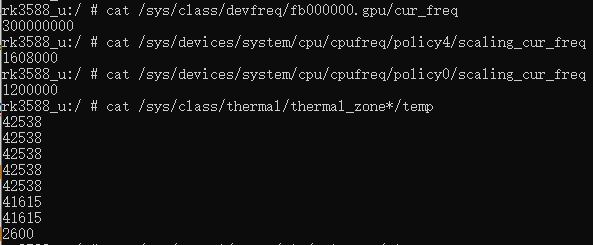
Status under antutu test:
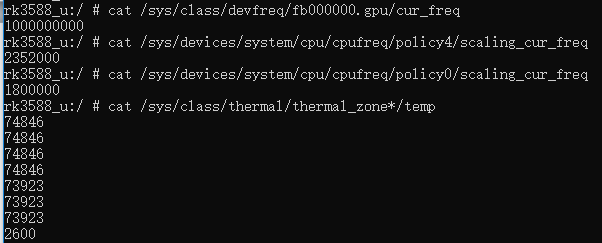
From the test data, it can be seen that the RK3588 maintains high CPU and GPU frequencies under almost full load, while the chip junction temperature remains below 75℃, demonstrating excellent temperature control performance.
The final Antutu score was 635,140.
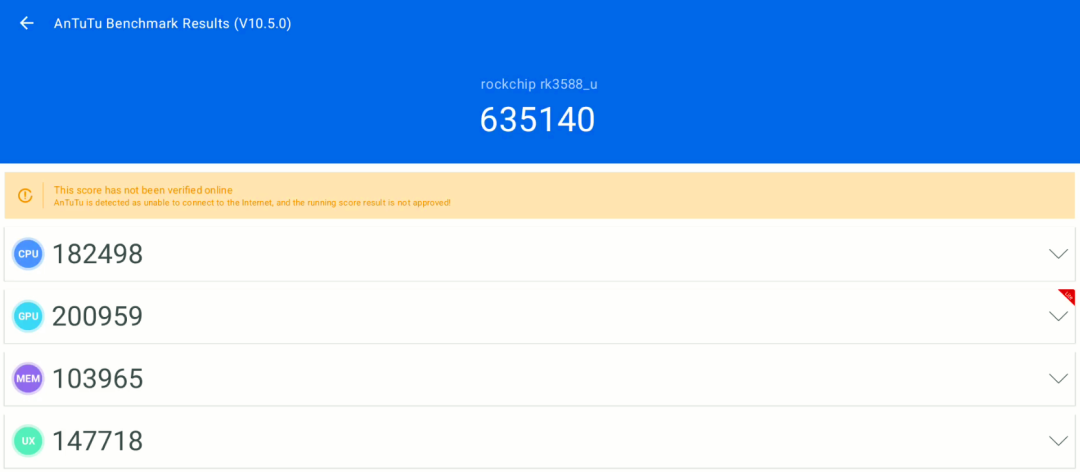
This benchmark score can be compared to the Snapdragon 7 Gen 1 and MediaTek Dimensity 1100. It shows that the RK3588 still has competitive performance today, reaching the performance level of mid-range mobile phone processors.
It is rumored that Rockchip plans to launch the RK3688 next year. This processor will adopt an all-large-core design, and its performance is expected to be significantly stronger than the RK3588.
Conclusion
Like most RK3588 development boards on the market today, the YY3588's hardware design is derived from Rockchip's public design.
However, the YOUYEETOO team has added some innovative interface designs based on the public design, such as an NFC module. In addition, the board also uses a design that combines WiFi and 4G modules to save space. From a differentiated perspective, this is a good effort.
There are several major advantages to using the YY3588 development board in your designs:
- Competitive Price: The board is offered at a very attractive price point compared to competitors with similar specifications.
- Rich Software Resources: The YY3588 comes with all necessary software materials, and is supported by a detailed wiki for development reference, greatly reducing the difficulty of getting started.
- High Flexibility: It adopts a core board + baseboard design. If the onboard interfaces don't meet your needs, you can design your own baseboard, which greatly increases project flexibility.


